
A uroflow test is like a quick map of how your urine moves, helping you see the bigger picture of your urinary symptoms. If you’ve been dealing with weak streams, hesitations, or a sense of incomplete emptying, this test can show where things might be off—whether it’s your outlet or how your bladder behaves. It’s about turning discomfort into data you can discuss with your clinician, so you’re not guessing about what’s happening.
Think of it as a guided checkpoint on your prostate journey. With a morning appointment, some simple fluid guidance, and a short symptom journal, you’ll gather concrete results you can interpret together with your doctor. The goal is to decide together on imaging, urodynamics, or conservative steps—anchored in precise findings and a plan that feels right for you.
Key Points
- Uroflow measures how fast and how much urine you pass, producing a flow curve with peak flow, average flow, and voided volume to assess voiding dynamics.
- It helps detect bladder outlet obstruction from an enlarged prostate and can track changes in detrusor function over time.
- Results should be interpreted with your symptoms, age, prostate status, and other tests rather than relying on a single number.
- For accuracy, follow your clinician’s guidance on fluids, timing, and medications before the test, and bring a symptom journal.
- After uroflow, combine results with imaging or further tests if needed, and discuss conservative, medical, or surgical options through shared decision-making.
What a Uroflow Test Measures for Men
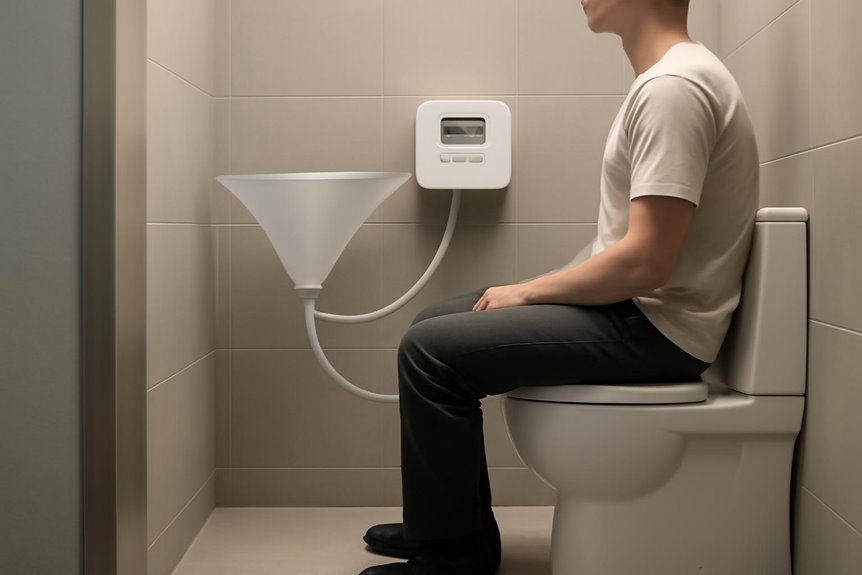
A uroflow test measures how fast you can urinate and how much urine you pass over a short period. You’re asked to void into a calibrated chamber, which records flow rate over time to produce a curve. Peak flow rate, average flow, voided volume, and flow pattern are interpreted relative to age and baseline health. The test helps identify abnormal flow, which may indicate bladder outlet obstruction, detrusor underactivity, or dysfunctional voiding. It is most informative when combined with symptom assessment and postvoid residual measurement. False positives can occur from incomplete emptying, improper technique, or transient factors like hydration status. Results guide further evaluation decisions, but they do not alone diagnose a specific condition. Clinicians use standardized thresholds and clinical context to determine next steps.
How Uroflow Fits Into Prostate-Related Care
Uroflow testing plays a specific role in evaluating prostate-related urinary symptoms by quantifying flow dynamics that may reflect outlet obstruction from an enlarged prostate or changes in detrusor function. In clinical care, it contributes objective data alongside symptoms, digital rectal exam, and imaging, helping distinguish bladder outlet issues from storage problems. Your results inform treatment choices, including whether medical therapy, minimally invasive procedures, or surgical options are appropriate. Focus on interpreting prostate flow and urinary dynamics to track progress or detect deterioration over time. Precision in measurement aids shared decision‑making with your clinician and supports risk‑stratified care plans. Early, evidence‑based management aims to preserve quality of life and urinary function.
Uroflow data guide treatment choices and track prostate-related urinary changes over time.
- Objective metrics guide treatment decisions
- Correlates between symptoms and measurable flow
- Longitudinal monitoring informs risk assessment
- Integrates with broader prostate care strategy
Preparing for Your Uroflow Appointment
When should you schedule and what should you expect during a uroflow test, and how can you prepare to ensure accurate results? You should book a morning appointment if possible, as fluids prior to testing may affect flow measurements. Bring any current medications list and a brief symptom journal to discuss recent changes. On arrival, you’ll complete consent and basic health screening, then void into a calibrated funnel or flowmeter while the clinician records flow rate, voided volume, and time. To improve accuracy, follow your clinician’s instructions about fluid intake and withholding medications if advised. Preparation tips include avoiding caffeine and alcohol before testing and wearing comfortable clothing. Prepare appointment questions in advance to clarify test purpose, potential need for repeated measures, and follow-up steps.
Interpreting Results: What Different Readings Mean
Interpreting uroflow results hinges on understanding the key measurements and what they indicate about bladder and urethral function. You’ll assess how urinary flow and peak velocity reflect voiding dynamics, outlet resistance, and detrusor pressure trends. A normal pattern suggests unobstructed flow, while reduced urinary flow or peak velocity can signal partial obstruction, weak detrusor contraction, or a combination. Rapid changes in flow rate may indicate intermittent relaxation or sphincter issues. Consider consistency with symptoms and prior tests to gauge significance. Absolute thresholds vary by technique, but context matters more than single numbers. Always integrate age, prostate status, and comorbidities to avoid misinterpretation.
Understanding uroflow: flow, peak velocity, and the clues to obstruction versus weak detrusor action.
- Urinary flow patterns: normal vs reduced with peak velocity implications
- Peak velocity relevance for detecting obstruction or weak detrusor action
- Correlation with patient-reported symptoms and timing during voids
- Limitations and need for follow-up testing if readings are inconclusive
Next Steps After Uroflow: Diagnosis to Treatment Options
After interpreting uroflow results, the next step is to integrate these findings with symptoms, medical history, and prior testing to establish a working diagnosis and determine appropriate management. You’ll typically move from evaluation to outlining next steps and treatment options based on objective data and patient experience. If flow rates and voiding patterns suggest obstruction or weak detrusor contraction, expect referral for further testing, such as ultrasound, postvoid residual measurement, or urodynamics. Discussion focuses on conservative options first when appropriate, including fluid management, timed voiding, and pelvic floor exercises. When indicated, treatment options may include pharmacotherapy, minimally invasive procedures, or surgery, tailored to symptom burden and risk profile. Shared decision-making ensures choices align with goals and preferences.
Common Questions
How Can Uroflow Help Differentiate Bladder From Prostate Issues?
Uroflow helps differentiate bladder from prostate issues by analyzing flow patterns and timing. You’ll note peak flow rate, voided volume, and post-void residuals, which guide interpretation. Bladder differentiation focuses on storage symptoms and flow variability, while prostate differentiation considers hesitancy, weak stream, and nocturia linked to obstruction. You’ll compare results against baseline, repeat tests if needed. This evidence-based approach helps distinguish bladder differentiation from prostatic obstruction, informing subsequent imaging or urodynamic testing.
Can Urinary Flow Be Affected by Medications I Take?
Yes, urinary flow can be affected by medications you take. Some drugs alter urine flow dynamics by relaxing or tightening smooth muscle, changing bladder capacity, or affecting urine production. Medication interactions may worsen or improve symptoms. Be aware that alpha-blockers, anticholinergics, diuretics, and certain analgesics commonly influence flow. Report all medicines to your clinician, and monitor changes in stream, hesitancy, or incomplete emptying. Evidence-based assessment guides dose adjustments and alternatives to minimize adverse medication interactions.
How Long Does a Typical Uroflow Test Take?
A uroflow test typically takes about 5 to 10 minutes, though the exact duration depends on your setup and how smoothly you provide the sample. You’ll lie or stand still, then pee into a calibrated device as instructed. Your patient concerns are addressed promptly as results are reviewed. For test preparation, avoid heavy fluids just before, inform staff of medications, and arrive at your appointment ready to discuss your symptoms and goals.
Do I Need to Fast or Change Fluids Before the Test?
No, you don’t have to fast, and you generally shouldn’t significantly change fluids before a uroflow test. A lightly hydrated state is preferred, and your clinician may advise avoiding alcohol or caffeine for a short period. Expect to arrive with a comfortably full bladder as instructed. In practice, unrelated topics and off topic considerations sometimes surface, but the test itself focuses on flow rate and volume. Follow your provider’s specific pre-test instructions for best accuracy.
Are There Home Tests or Follow-Ups After Uroflow?
Home testing isn’t common for uroflow, but you can monitor symptoms and discuss results with your clinician. After the test, you’ll likely have post test follow ups to review peak flow, voided volume, and pattern changes. Interpretations rely on your baseline and age. Keep a care diary, report new symptoms promptly, and schedule echoed reviews if needed. If results are inconclusive, you may be referred for imaging or urodynamics to refine management decisions.