
You’ll find 2026’s men’s workout book landscape blends practical, at-home plans with clear progressions you can actually stick to. From 12-week strength blocks to 30-day kettlebell shifts, these guides stress overload responsibly and joint care. Companion planners keep you accountable without extra fuss. If you’re after a targeted edge—belly fat trimming, senior strength, or quick gains—the right pick could transform your routine. Curious where your current habits align, and what you’ll try first?
Key Points
- Phase-based, at-home programs like Men’s Health Muscle After 40 offer structured progression across 12 weeks using minimal equipment for longevity and strength.
- The No Gym Kettlebells program enables a full-body transformation with one kettlebell and a comprehensive 30-day progression without gym access.
- The Belly Fat Burner Workout Planner provides a 28-day, ab-fat focused plan with daily trackers for consistent progress.
- Spiral-bound planners and planners with page holders enhance at-home usability, tracking reps, sets, and progression across days and months.
- Targeted outcomes emphasize muscle maintenance, injury prevention, and fat loss for adults over 40, making these books practical long-term fitness guides.
| Men’s Health Muscle After 40: 12-Week Home Plan |  | Home-Growth Gains | Format: 192-page spiral-bound guide | Target Focus: Muscle-building with joint protection | EquipMent Emphasis: Dumbbells and minimal equipMent | VIEW LATEST PRICE | Read Our Analysis |
| Men’s Health No Gym Kettlebells: Full-Body Transformation | 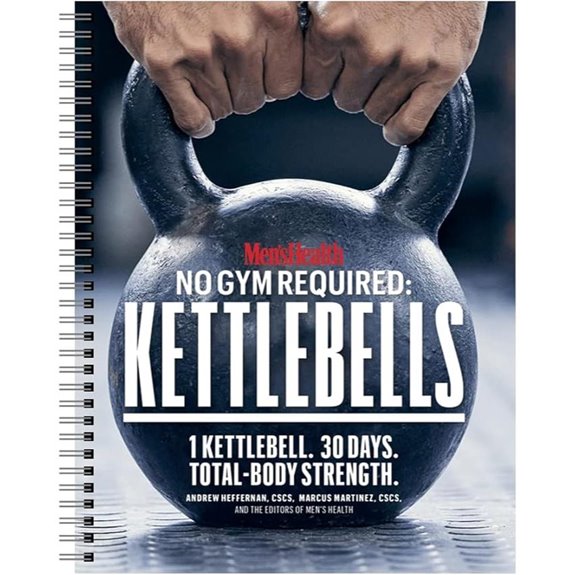 | No-Gym Convenience | Format: 141-page spiral-bound fitness planner | Target Focus: Full-body transformation with kettlebell focus | EquipMent Emphasis: Kettlebell-based workouts (not included) | VIEW LATEST PRICE | Read Our Analysis |
| Men’s Health 28-Day Belly Fat Burner Workout Planner |  | Ab Fat Focus | Format: 28-day planner notebook (A5) | Target Focus: Belly fat reduction and core training | EquipMent Emphasis: Bodyweight and basic routines (no gym required) | VIEW LATEST PRICE | Read Our Analysis |
More Details on Our Top Picks
Men’s Health Muscle After 40: 12-Week Home Plan
For those over 40 chasing home-growth gains, Men’s Health Muscle After 40: 12-Week Home Plan stands out as a practical, at-home strength program. You follow a 12-week, phase-based plan designed to build and maintain muscle with minimal equipMent. You’ll need three dumbbell pairs, a bench, an ab wheel, and a jump rope, with a resistance band optional. The program emphasizes warmup optimization, proper form, and illustrated exercise explanations. It primes you for increasing weekly intensity while protecting joints. Spiral-bound, 192 pages keep you oriented at home, offering clear guidance, accessible workouts, and a sustainable path to muscle growth.
- Format:192-page spiral-bound guide
- Target Focus:Muscle-building with joint protection
- EquipMent Emphasis:Dumbbells and minimal equipMent
- Program Length:12 weeks
- Instructional Content:Exercise explanations with illustrations
- Brand Affiliation:Men’s Health (HEARST)
- Additional Feature:Spiral-bound lay-flat design
- Additional Feature:Phase-based progression
- Additional Feature:Joint-friendly focus
Men’s Health No Gym Kettlebells: Full-Body Transformation
If you want a full-body transformation with minimal equipMent, this book is ideal. Mens Health No Gym Kettlebells guides you through a 30-day plan that progresses from beginner moves to advanced flows, using just one kettlebell. You’ll sculpt arms, strengthen abs, and layer on muscle with clear, illustrated, step-by-step directions. The package includes 36 additional workouts and a 141-page spiral-bound fitness planner with a snap-in page holder, though the kettlebell isn’t included. It’s easy to follow, with no fancy gear required, and backed by positive reviews. Warranty via Amazon and a solid 4.6-star rating underline its reliability.
- Format:141-page spiral-bound fitness planner
- Target Focus:Full-body transformation with kettlebell focus
- EquipMent Emphasis:Kettlebell-based workouts (not included)
- Program Length:30 days (plus 36 additional workouts)
- Instructional Content:Detailed exercises with step-by-step directions
- Brand Affiliation:Men’s Health (HEARST)
- Additional Feature:141-page fitness planner
- Additional Feature:Snap-in page holder
- Additional Feature:30-day progression plan
Men’s Health 28-Day Belly Fat Burner Workout Planner
The Men’s Health 28-Day Belly Fat Burner Workout Planner is ideal for anyone chasing a tangible ab-fat focus in a streamlined routine. You’ll follow medium-high intensity compound exercises to burn fat and chisel abs, with a planner designed to keep you on track. Across 28 days, 48 exercises turbocharge fat loss and cover upper body, total body, lower body, and core, plus a daily workout tracker. It’s back-pain friendly, includes essential nutrition tips, and offers tricks to reach goals. This A5 yellow notebook provides guided pages, a bookmark, and structured sections for steady progress.
- Format:28-day planner notebook (A5)
- Target Focus:Belly fat reduction and core training
- EquipMent Emphasis:Bodyweight and basic routines (no gym required)
- Program Length:28 days
- Instructional Content:Daily workout tracker and guidance
- Brand Affiliation:Men’s Health (HEARST)
- Additional Feature:Daily workout tracker
- Additional Feature:Back-pain friendly options
- Additional Feature:Yellow notebook-style cover
Factors to Consider When Choosing Men’s Workout Program Book
When you pick a men’s workout program book, start by checking if you can do it at home and what equipment you’ll need. Look for clear phase progression and a planner format that feels usable on busy days, so you stay on track without extra guesswork. Make sure the target audience matches your goals and that the plan suits your current fitness level and schedule.
Program Accessibility At Home
Are you prioritizing home workouts that fit into a busy schedule? These programs are designed for at-home use, minimizing gym visits and letting you train with limited equipment. Product #1 requires dumbbells, a bench, an ab wheel, and a jump rope, with an optional resistance band, for its 12-week plan. Product #2 centers on a 30-day progress path using a single kettlebell (kettlebell not included) plus a 141-page planner for tracking workouts. Product #3 provides a 28-day planner format with daily workout tracking and guidance, suitable for home use with no required equipment. Each option uses spiral-bound or planner formats to facilitate at-home access and easy page-flipping during routines, enhancing convenience and consistency.
Equipment Requirements Clarity
Equipment clarity is essential when picking a men’s workout book, especially if you’re balancing a busy schedule. You’ll see varied gear expectations across options. Product #1 outlines a multi-item home setup: three dumbbell pairs (light, medium, heavy), a bench, an ab wheel, and a jump rope, with an optional resistance band. Product #2 centers on a single-kettlebell approach and notes that the kettlebell isn’t included, so you’d provide your own. Product #3 is a planner/notebook, requiring no specific equipment beyond writing supplies and focusing on tracking rather than gear. Across these listings, explicit equipment details help you assess what you have or need to acquire before starting. Consider your space, budget, and willingness to source multiple items versus minimal gear.
Phase Progression Clarity
Phase progression clarity helps you avoid guesswork and stay on track. A clear phase progression guides weekly intensity increases, as shown in the 12-week program with a three-phase structure designed to prime your body for higher loads. Phase-based progression helps you manage jumps in volume and resistance, reducing burnout and joint strain. Structured phases support progressive overload, so workouts become more challenging as you adapt. A well-defined phase progression provides predictable milestones, making it easier to track improvement and adherence. Programs should specify progression criteria—reps, weight, or sets—within each phase to maintain clarity and accountability. When choosing a book, look for explicit phase timelines and criteria, plus clear notes on how to adjust loads as you progress.
Planner Format Usability
Choosing a workout program book that fits your routine means prioritizing planner format usability. A spiral-bound planner, like the 192-page Men’s Health guide, lays flat and stays open for easy reference during workouts, boosting usability. If you want steady tracking, a dedicated daily workout tracker and monthly sections, as seen in the 28-day belly fat planner, help you monitor progress and stay consistent through the program. Snap-in page holders and bookmark features, present in the kettlebell-focused planner, let you reach current routines or goals quickly. Compact dimensions (around 8.5 x 6.5 inches or 8.49 x 6.5 inches) keep it portable without bulk. Clear, illustrated exercise explanations and phase-based progression further aid comprehension and adherence throughout your regimen.
Target Audience Fit
When selecting a men’s workout program book, you want one that fits your lifestyle and goals. For adults over 40, look for joint-friendly movements and gradual progression to guard against injuries. If you prefer convenience, choose a home-based plan with minimal equipment that still delivers effective results. A program with phase-based progression helps you scale weekly intensity, sustaining long-term adherence without burnout. If you’re goal-driven with a clear timeline, a 12-week format offers structured milestones to track progress. Daily accountability matters too, so consider a 30-day or 28-day calendar that supports consistent logging and motivation. In short, match the format to your schedule, equipment access, and how you want to measure progress.
Common Questions
How Do I Choose a Program for My Fitness Level?
To pick a program, first honest assess your current fitness level and any injuries, then set clear goals. Choose a plan that matches your strength, endurance, and time you can commit. Look for progressive overload, balanced workouts, and rest days. Start with lighter weights or beginner routes, track reps, and adjust weekly. If you stall, switch phases rather than abandoning it. Consult a trainer if unsure, and listen to your body to avoid overtraining.
Are These Books Evidence-Based and Scientifically Cited?
Yes, some are evidence-based and cite peer-reviewed sources, but not all. You’ll want to check each book’s references, look for randomized trials, and note the study quality. If a chapter claims universal results without data, that’s a red flag. You’ll connect those citations to your own plan, just as a seasoned navigator uses stars for guidance. If sources are vague or absent, keep looking for stronger, verifiable science behind their recommendations.
Can These Plans Be Adapted for Injuries or Limits?
Yes, you can adapt these plans for injuries or limits. Start with a medical release, then scale volume, intensity, and range of motion to your tolerance. Substitute safer movements, like machines or seated versions, and prioritize technique. Track pain signals, stop if it worsens, and progress gradually. Focus on mobility, stability, and core work while avoiding pain-provoking actions. Consult a clinician or certified trainer for personalized tweaks and ongoing safety.
Do They Address Nutrition Beyond Basic Guidelines?
Nutrition is covered beyond basics in some, but not all, books. You’ll find meal timing, macro guidance, and sample plans, yet depth varies. You’ll need to seek titles that emphasize whole-food recipes, sustainable eating, and practical adjustments for goals. Think of it as a compass, not a map—you still chart your own course. If you want specifics, I can highlight titles that push beyond generic guidelines and tailor recommendations to your needs.
Which Titles Offer Progressive Overload Methods?
Yes—look for titles that emphasize progressive overload, such as systematic rep progression, periodization, and programmable intensity. You’ll find books outlining how to increase load safely, track performance, and adjust volume and frequency over cycles. Prioritize authors who provide practical progression templates, deload strategies, and clear exercise substitutions. Avoid vague advice, and choose those with examples you can customize to your training schedule. Start with a focused plan, then steadily challenge your limits for steady gains.
All Together
You pick up these guides like seeds in winter—potential buried in quiet pages. As you train, the calendar becomes a sunrise, each session a kernel waking your effort. The weights are anchors, grounding you; the plan is a compass, pointing you toward consistency. When motivation wanes, the spiral planner circles back, symbolizing renewal. Your body becomes a map of small, daily promises kept, and every rep, like a star, brightens the path you chose to walk.