
You’re curious about Montezuma’s Secret and what it promises in a world full of performance lore and myth. You want to understand how ancient motifs travel from sacred stories into modern marketing, and what that means for you as a consumer or storyteller. This product invites you to see how archetypes of authority and ritual prowess are repackaged for different audiences, and to consider whether the core essence is preserved or altered along the way.
You may also be wondering how to navigate the line between cultural homage and commodification. This guide speaks to your need for clarity: it breaks down how storytelling choices shape perception, how consent and authenticity come into play, and what real-world reactions reveal about value and responsibility. It’s about helping you decide what resonates, what feels respectful, and what you’re willing to support as you engage with these timeless motifs in a modern marketplace.
Key Points
- The phrase likely traces sensational storytelling rather than primary sources, emphasizing misinterpretation and myth rather than direct Montezuma-linked origins.
- The motif travels via trade routes and media, with regional adaptations that reframed ancient themes for local audiences.
- Debunking stresses contextual interpretation, focusing on performative archetypes and cross-media analysis over single-origin claims.
- Across regions, spectator expectations, sponsorship, and commodification shape how the theme is presented and received.
- Ethical considerations urge provenance labeling, respectful representation, and community-led oversight to prevent distortions.
Montezuma’s Secret: Origins and Myths
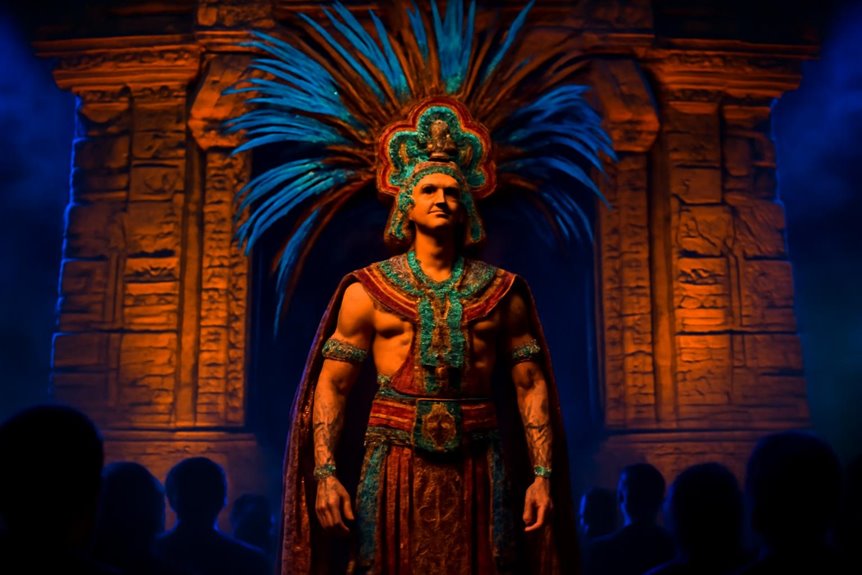
Scholars debate the origins of the phrase and its supposed link to Aztec ruler Montezuma, noting that many modern claims about a universal “male performance formula” are built on misinterpretations or later sensationalism rather than primary sources. You’ll analyze how myths crystallized in later periods, distinguish folklore from contemporaneous records, and map claim roots to travelogues, colonial dime-store histories, and sensational press. The discussion emphasizes authentic representation and ethical storytelling: presenting competing theories, acknowledging gaps, and avoiding overreach. You examine linguistic traces, cross-cultural diffusion, and the role of commodified exotica in shaping expectations. By keeping sources transparent and context-rich, you maintain scholarly rigor while clarifying what is reasonably supported versus what remains speculation.
How a Provocative Ancient Theme Traveled the World
You can see how the provocative ancient theme spread beyond its origins, resonating across different cultures through trade routes, media, and interpretive art. The evidence shows regional adaptations—mythic meanings shifting with local norms—yet a recognizable core persists in its appeal. This global reach prompts us to contemplate how context shapes reception, not just reproduction.
Global Reaches: Ancient Theme
Global audiences didn’t just encounter an ancient theme; they encountered a traveling one. You trace how performers carried symbols, myths, and aesthetics across borders, not as passive echoes but as disseminated signals shaped by power and markets. The pattern shows deliberate selection, commodification, and adaptation, aligning with colonial dynamics and evolving media landscapes. You examine evidence from program notes, festival catalogs, and press coverage to map routes, reception, and shifts in meaning. The result is a chain of influence where audience expectations, sponsorships, and venue types feed back into performance design. Understanding this flow clarifies why certain tropes endure while others fade.
- Immoral commodification underwrites cross-cultural exposure
- Colonial gaze informs framing and interpretation
- Global networks steer programming choices
- Market incentives color costume and symbolism
- Critical reception tracks shifts in legitimacy and critique
Cultural Resonance Across Regions
How did a provocative ancient theme echo across continents, taking on distinct textures in each region? You’ll see how cultural commerce shaped reception, with audiences decoding Montezuma’s mystique through local lenses. In some markets, myth exploitation attached to national mythologies, sparking sensationalized performances; in others, it aligned with global entertainment currents, emphasizing spectacle over history. Evidence suggests regional tweaks—language, costume, ritual cues—that amplified resonance while diluting original context. The pattern reveals a transactional dynamic: creators monetize curiosity, venues monetize audience, and media amplify curiosity. Across borders, the theme traveled via adaptable narratives, sometimes reinforcing stereotypes, sometimes provoking critical interrogation. Table below illustrates the cross-regional texture shifts, then you’ll assess implications for cultural governance and performer branding within a global marketplace.
| Region | Texture/Impact |
|---|---|
| Americas | Spectacle-driven myths |
| Europe | Historical recontextualization |
| Asia | Hybrid ritualization |
The Performers: Archetypes, Skills, and Stagecraft
What archetypes populate Montezuma’s stage, and how do their distinct skills shape the performance’s rhythm and meaning? You observe a deliberate pairing of totems and talent, where archetypes guide intent and audience perception. The performers deploy stagecraft and technique to fuse mythic symbolism with physical discipline, creating a measurable impact on tempo and interpretation. Evidence shows that varied skills—mimicry, gesture, vocal projection, and athletic nuance—construct a multi-layered narrative presentationally anchored in ritual memory.
- The narrators and orators
- The dancers and mimics
- The athletes and lifelike impersonators
- The percussionists and vocalizers
- The ritualists and prop handlers
Cultural Souvenirs and the Economy of Spectacle
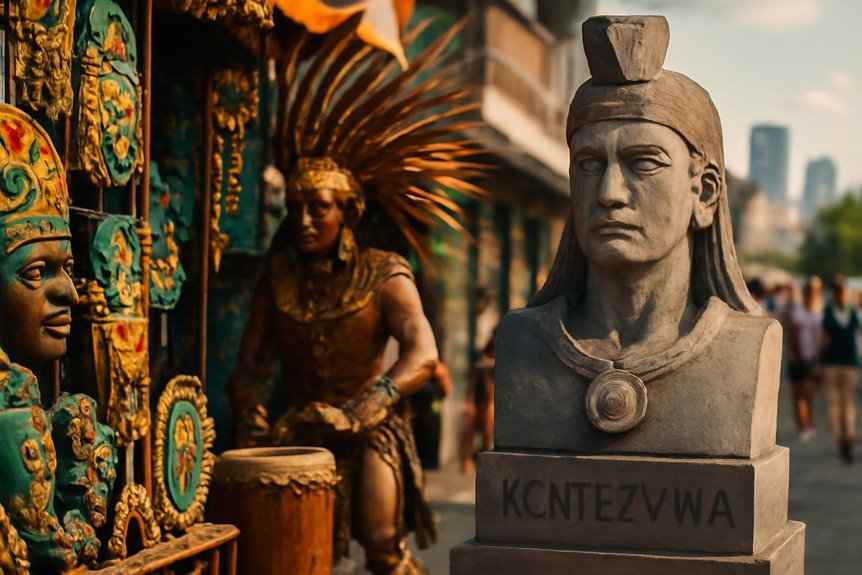
Cultural souvenirs and the economy of spectacle intersect where audience memory, merchandise, and myth co-create value, shaping how Montezuma’s mythic frame extends beyond the stage. You observe how souvenirs translate performance into portable narratives, boosting brand reach while anchoring impressions in tangible artifacts. This dynamic links audience engagement to revenue streams, yet invites scrutiny: cultural appropriation can distort origins, commodifying sacred symbols for mass appeal. Clear provenance labeling and respectful representation help mitigate harm, turning merchandise into learning cues rather than caricature. Consent ethics becomes a practical baseline, guiding licensing, imagery use, and collaboration with source communities. When souvenirs reflect informed partnerships and transparent storytelling, they sustain interest without eroding cultural significance, aligning spectacle with responsible cultural stewardship and long‑term reputational integrity for the production and its global audience.
Power, Authenticity, and Ethical Questions in the Performance
Power, authenticity, and ethical questions in the performance arise at the intersection of audience expectation, cultural representation, and corporate or artistic intent. You assess how power dynamics shape who performs, who is represented, and who benefits, while noting where authenticity meets commodification. Evidence shows that audiences prize credibility, yet producers may calibrate tropes to maximize appeal, risking superficial representation. Ethical boundaries hinge on consent, source integrity, and respect for communities depicted. You should weigh intent against impact, and document decision processes transparently.
Power, authenticity, and ethics shape who benefits, with transparency in intent and impact.
- Power dynamics influence casting and narrative framing
- Authenticity requires verifiable sources and clear attributions
- Ethical boundaries demand participant consent and cultural consultation
- Audience expectations press for entertainment value and accuracy
- Corporate goals must align with responsible storytelling
Case Studies: Sightings, Adaptations, and Viral Moments
You’ll see how sightings and echoes shape interpretive narratives, linking anecdotes to broader social patterns rather than isolated incidents. Across cultures, adaptations reveal shared motifs and local recalibrations that illuminate audience reception and ethical boundaries. Viral moments offer a lens on attention economies, showing what travels, why, and with what cultural residue.
Sightings And Echoes
Have sightings of Montezuma’s Secret taken on a life of their own, reappearing in diverse contexts that spill over from legend into modern media? You track patterns across reports: social clips, theater reviews, and pop culture memes converge, forming a visible echo chamber. The evidence weighs toward consistent messaging: a performative archetype that travels, reshapes itself, and prompts public discourse. You assess sources for methodological soundness, noting selective reporting and confirmation bias. The term myth debunking appears alongside claims of ritual precision, urging careful parsing. In practice, modern staging often blurs history with spectacle, amplifying reach without verifying origin. The result is a multi-site phenomenon that resists simple categorization, demanding contextualized interpretation rather than sensational shorthand.
- myth debunking
- modern staging
- cross-media circulation
- performative archetypes
- contextual analysis
Adaptations Across Cultures
Across cultures, adaptations of Montezuma’s Secret reflect patterned remixing rather than simple replication: sightings morph into localized forms, orften framed by regional aesthetics, mythopoetics, and media ecosystems. You chart how counter-narratives emerge, testing claims through evidence, not charisma alone.
Table: Adaptations Across Cultures
| Locale | Form | Core motif |
|---|---|---|
| Iberia / Latin America | Reframed rituals, street performances | Masculine idealism, ceremonial cadence |
| East Asia | Historical drama paratexts, vignettes | Authority, lineage, mythopoetics |
| North America | Documentary-style narratives, podcasts | Skepticism, audience consent |
| Africa / Middle East | Folkloric retellings, community festivals | Shared mythic arc, resilience |
These case studies illustrate myth debunking and audience consent as evaluative standards, anchoring analysis in empirical observations rather than sensational claims.
Viral Moments Worldwide
How do moments of Montezuma’s Secret proliferate across platforms and borders, and what do these viral instances reveal about cultural reception? You track patterns across clips, memes, and interviews, noting how audiences reframe the ritual as performance, sport, or satire. The cases show hybridization: Latinx, European, and Asian viewers remix symbols to suit local humor and markets, while critics flag ethical concerns about commodification. You measure engagement against theatrical pricing and online sharing, observing shifts in legitimacy as audiences value transparency in rehearsal processes. The result is a scaled feedback loop where perception drives replication, and replication informs perception, shaping a continuum from viral moment to enduring trope.
- cultural reception benchmarks
- audience remix dynamics
- cross-platform diffusion
- theatrical pricing
- rehearsal transparency
Global Reception: Audiences, Critics, and Cultural Dialogue
Global reception of Montezuma’s Secret reveals a nuanced dialogue among audiences, critics, and cultural commentators: reactions vary by regional context, media framing, and expectations about performance, gender, and ethnicity. You observe how critics weigh historical fidelity against inventive staging, and how audiences connect spectacle to contemporary discourse on identity. Evidence shows mixed responses: some praise craftsmanship, others accuse cultural appropriation or oversimplification of Indigenous histories. You detect a pattern where discourse shifts with local cultural literacy, press framing, and venue type, influencing perceived legitimacy. Audience ethics emerge as a key metric, shaping discussions about consent, representation, and impact on marginalized communities. In sum, reception reflects complex negotiating grounds between entertainment value and cultural responsibility, informing ongoing calibration of global programming strategies.
Behind the Curtain: Patrons, Media, and Influencer Dynamics
Patrons, media, and influencer dynamics shape how Montezuma’s Secret is funded, framed, and amplified beyond the stage. You observe how sponsorships steer interpretation, while critics challenge or normalize sensational angles. The result is a negotiated narrative that can drift toward cultural misinterpretation unless ethical storytelling guides decisions. Funding sources influence which anecdotes survive scrutiny and which fade, shaping what audiences encounter. Media partners determine cadence, image, and reach, often privileging spectacle over context. Influencers translate performance into shareable fragments, amplifying impressions that may misread origins or intent. You can map these forces to assess bias, accountability, and cultural responsibility, ensuring the work remains anchored in evidence, context, and respect for heritage.
- Funding transparency and influence
- Framing through media partnerships
- Influencer amplification and interpretation
- Cultural misinterpretation risks
- Ethical storytelling obligations
What Comes Next: Trends, Safeguards, and Preserving Heritage
What comes next for Montezuma’s Secret hinges on balancing innovation with stewardship, ensuring trends enhance understanding rather than erode heritage. You’ll evaluate momentum across audiences, noting how nostalgia tourism drives renewed interest yet risks simplification of complex histories. Evidence suggests responsible curation—contextual narratives, expert consultation, and transparent sourcing—produces sharper engagement without sensationalism. In practice, expect hybrid formats: documentary threads, cosplay ethics discussions, and interactive exhibits that foreground archaeologically grounded details rather than spectacle. Safeguards should include attribution, limitations on cultural appropriation, and community-led oversight to prevent misrepresentation. Preservation relies on archival standards, open-access materials, and periodic reassessment of impact. If you balance novelty with accountability, the project can educate, entertain, and sustain heritage without sacrificing integrity.
Common Questions
How Is Masculinity Portrayed Across Different Cultures in This Performance?
Masculinity is portrayed variably, shaping your perception as you watch. You observe masculinity exploration across scenes that juxtapose strength, vulnerability, ritual, and humor, signaling diverse ideals. Cultural portrayals differ in power dynamics, body language, and audience engagement, revealing both universal expectations and local scripts. You’ll note how performers negotiate authority, discipline, and charisma within distinct traditions, offering contextual evidence of how masculinity is constructed. These shifts reflect broader cultural values, guiding interpretation of gender norms in the performance.
What Are the Consent and Rights Issues for Performers Depicted?
Consent issues and performer rights are central concerns. You must examine how consent is obtained, documented, and revocable both on‑stage and off‑stage, ensuring voluntary participation and ongoing agreement for any sensitive material. You should assess consent standards across jurisdictions and the potential for coercion or misrepresentation. You’ll analyze contracts, compensation, safety protocols, and rights to image and withdrawal, framing conclusions with evidence and context to support responsible, ethical production practices.
Do Replicas Rely on Cultural Appropriation or Respectful Collaboration?
Replicas balance cultural exchange with respectful collaboration. You should evaluate intent, source communities, and consent, then weigh audience reverence against potential harm. You’re encouraged to partner with cultural stewards, cite provenance, and share benefits. You assess whether adaptation honors traditions or erodes meaning. You analyze power dynamics, representation quality, and ongoing dialogue. You document impact, gather feedback, and adjust practices. You prioritize transparency, reciprocity, and ongoing accountability, ensuring cultural exchange enriches rather than exoticizes communities.
How Are Safety Standards and Performer Welfare Ensured on Tour?
You’ll find safety protocols and performer welfare are prioritized through rigorous risk assessments, regular health checks, and on-tour oversight. Evidence bases guidelines for rehearsal safety, emergency response plans, and confidential reporting channels, ensuring incidents are documented and mitigated. Evaluations consider workload, travel fatigue, and mental well-being, with access to medical staff and counselling. Contextual audits compare practices across venues, driving continuous improvement and accountability for every performer’s welfare on tour.
What Is the Financial Model for Global Licensing and Profits?
You’ll see the financial model relies on global licensing, revenue sharing, funding models, and territory rights. You’re offered tiered licenses to operate in distinct regions, with royalties paid from box office, streaming, and merchandising. Revenue sharing aligns agents, producers, and rights holders, while funding models blend upfront investments with performance guarantees and milestone payments. Territory rights determine exclusivity, influencing pricing, risk, and scalability as you expand into new markets with transparent auditing.